2026 How to Choose the Right Gas Mask for Your Safety Needs?
Choosing the right gas mask for your safety needs is crucial. According to Dr. Emily Carter, a leading expert in personal protective equipment, "A gas mask can mean the difference between safety and disaster." In today's uncertain world, understanding how to select an appropriate gas mask is more important than ever.
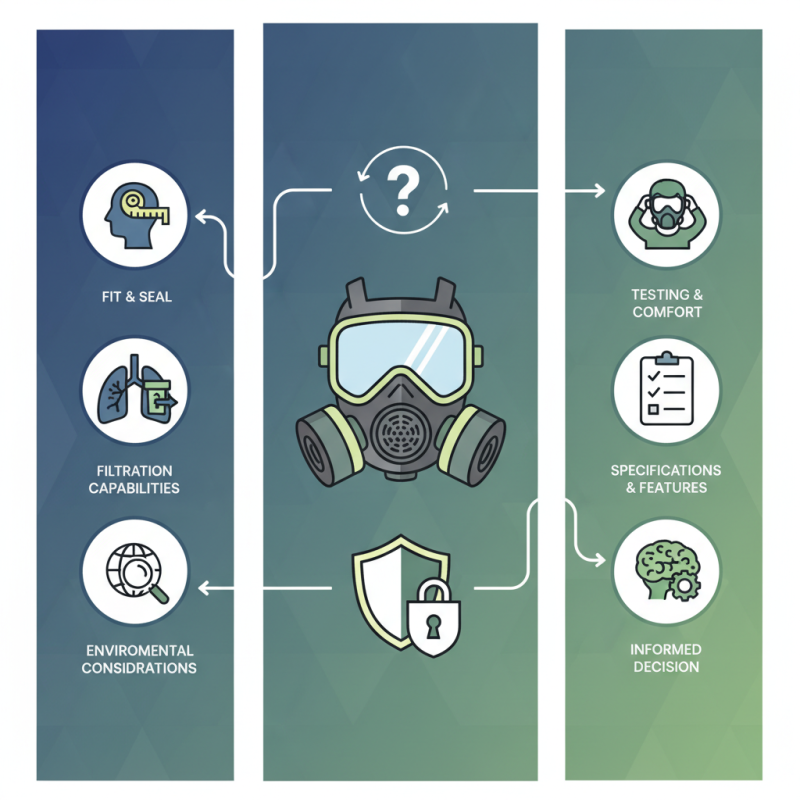
There are various factors to consider. From fit to filtration capabilities, each aspect plays a role in effectiveness. Many people overlook the importance of finding the right size or seal. A poorly fitted gas mask can compromise safety. It's essential to test different models to find what works best for individual needs.
The market offers a wide range of options. However, not all are created equal. Some may lack essential features needed for specific environments. Take the time to educate yourself on the specifications. Consider your surroundings and potential threats. Only then can you make an informed decision that prioritizes your safety.
Understanding the Different Types of Gas Masks Available in the Market
When selecting a gas mask, understanding the various types available is crucial. There are primarily three categories:
air-purifying respirators (APRs),
powered air-purifying respirators (PAPRs), and
self-contained breathing apparatus (SCBAs).
APRs use filters to clean incoming air, making them suitable for specific contaminants. According to industry reports, APRs can effectively filter out particles, gases, and vapors, but they are not useful in oxygen-deficient environments.
PAPRs are another option. They use a battery-powered blower to supply clean air, providing a higher level of protection. These are ideal for extended use. A recent study indicated that workers using PAPRs reported more comfort during extended wear compared to standard masks. However, they may be cumbersome and often require additional training to use effectively.
SCBAs, while offering the highest level of protection, necessitate a proper understanding before use. They provide breathable air from a tank. However, their weight and maintenance needs can be challenging. The decision to choose any type of gas mask must be informed by individual safety needs. Evaluating the environment and potential risks is essential, as the wrong choice might expose users to greater danger than intended.
Key Factors to Consider When Selecting a Gas Mask for Personal Safety
Choosing the right gas mask can be daunting. It's crucial to focus on specific factors that affect your safety. First, understand the level of protection you require. Different masks offer varying degrees of filtration. Review the filter ratings carefully. A mask that fits poorly is useless, even with top-notch filters.
Comfort is another key factor. A mask that causes discomfort can lead to extended wear issues. Look for adjustable straps and a design that suits your face shape. Always consider testing masks before committing to one. You may find that what seems perfect in theory doesn't work well in real-life situations.
Lastly, keep in mind the intended use. Are you preparing for emergencies or a specific activity? Certain masks suit different environments. Reflect on your needs and research accordingly. Sometimes, the best choice isn’t the one that looks appealing but the one that fits your exact requirements. Safety should always come first.
Assessing Protection Levels: Ratings and Certifications of Gas Masks
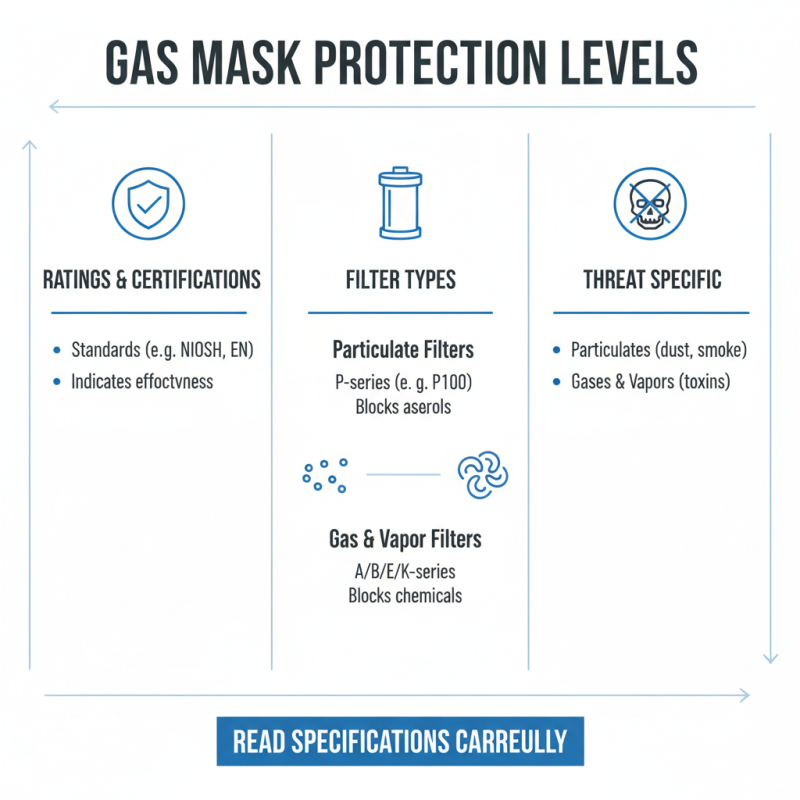
When selecting a gas mask, understanding protection levels is crucial. Ratings and certifications provide insights into the effectiveness of various masks. Look for filters classified by standards, indicating their capabilities against specific threats. Certain masks may perform well against particulates, but they might fail against gases. Reading the specifications carefully is essential.
Not all masks fit every situation. Some may be certified for industrial use but offer limited protection in combat scenarios. Styles and sizes vary. A poor fit can result in leaks, compromising safety. Test the mask before making a decision. You may feel discomfort or restricted breathing, which is a sign you need a better option.
Consider the environment you'll be in. High-risk areas might require upgraded masks with advanced filters. Yet, they often come with a higher price tag. Weigh the pros and cons before purchasing. Ensure you're not swayed by marketing buzzwords. Each gas mask has its strengths and weaknesses, which must align with your personal safety needs.
Importance of Fit and Comfort in Gas Mask Selection for Long-term Use
Choosing the right gas mask is critical for safety. Fit and comfort are key factors, especially for long-term use. A poorly fitting mask can lead to leakage, compromising protection. According to a report by the National Institute for Occupational Safety and Health (NIOSH), a mask must seal properly to function effectively. A tight fit reduces air leakage by as much as 80 percent.
Comfort significantly impacts the wearer’s ability to endure long durations. A mask that causes discomfort can lead to fatigue. The same NIOSH report highlights that users are more likely to wear a mask correctly if it is comfortable. Features like adjustable straps and a lightweight design play a crucial role. If a mask feels heavy or restricts movement, users may remove it when they need it most.
Material choice is another vital consideration. Some materials may irritate the skin or cause allergic reactions. A study published in the Journal of Occupational and Environmental Hygiene found that prolonged use of uncomfortable masks can affect work performance. Reflections on personal experiences show that many prioritize style over comfort, but this can lead to disastrous outcomes. Choosing the right gas mask requires careful consideration of fit, comfort, and practicality.
Maintenance and Care: Ensuring Your Gas Mask Meets Safety Standards
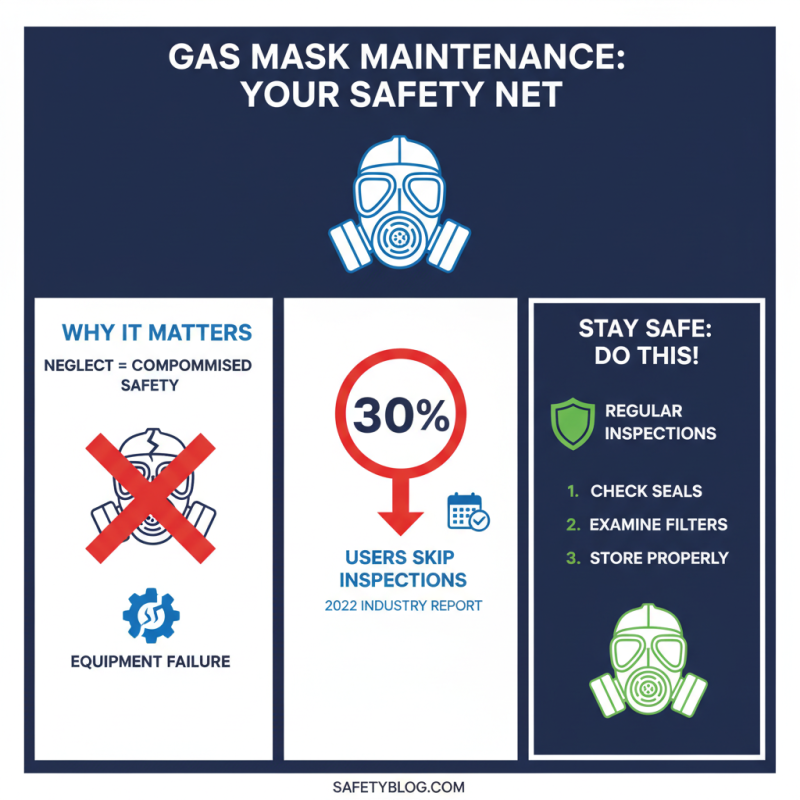
When selecting a gas mask, maintenance is crucial. Neglecting this aspect can compromise safety. According to a 2022 industry report, over 30% of users fail to conduct regular inspections. This oversight can lead to equipment failure when it is most needed.
Regular cleaning is essential for optimal performance. Dust, dirt, and contaminants can accumulate on filters and surfaces. A simple wipe with a damp cloth can make a difference. Ensure that filters are replaced according to guidelines, typically every 6 months. Consistent care extends the life of your gas mask.
Storage conditions also play a significant role. A dark, cool place is ideal. High temperatures can degrade materials. Yet, many users overlook this when storing their equipment. Remember, a gas mask is only as effective as its maintenance. Taking these simple steps helps ensure your mask meets safety standards and ready for emergencies.