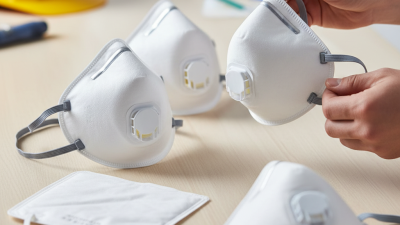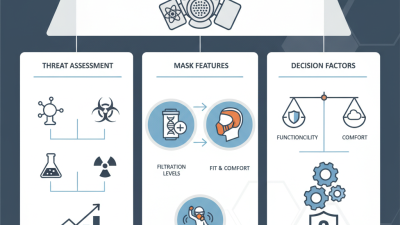
Buying a smoke mask for international use involves more than comparing prices and filter ratings. Smoke conditions vary widely, from wildfire particles outdoors to fine ash entering a warehouse. A product that looks reliable may still leak around the nose, cheeks, or jaw. Dr. Lisa M. Brosseau, a respected respiratory protection researcher, emphasizes a practical rule: “A respirator is only as good as its fit.”
This guide examines seven buying tips for global purchasers. It considers filtration performance, face-seal design, breathing resistance, certification, sizing, storage, and supplier reliability. Buyers should check whether the product is a true particulate respirator or only a basic dust mask. These terms are often confused. They should not be.
Look closely at test documentation. Verify the standard, issuing body, model number, and production details. Requirements differ between markets, so one certificate may not satisfy every destination. A clear product label helps. So does a supplier willing to provide samples before large orders.
Fit testing deserves special attention. A mask can pass laboratory testing yet fail on a real face. Facial hair, glasses, sweat, and movement may create small gaps. Small gaps matter.
There is no perfect purchase decision. Cost, comfort, protection, and availability can conflict. Even experienced buyers sometimes overvalue filtration numbers. A practical smoke mask should support consistent use, not merely impressive specifications. Careful inspection remains essential, especially when purchasing thousands of units for unfamiliar markets.
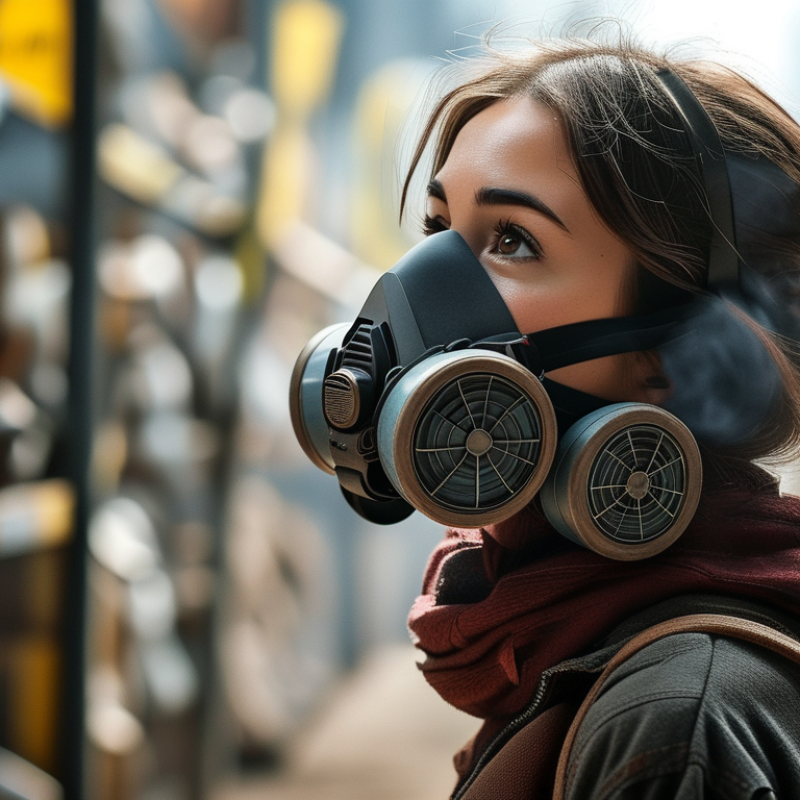
Before comparing smoke masks, define the smoke you expect. A kitchen fire, wildfire, welding task, and chemical incident create different hazards. Smoke may contain fine particles, irritating vapors, carbon monoxide, or oxygen-poor air. A dark cloud is not a reliable warning. It can look mild while carrying dangerous gases. Write down the source, exposure time, temperature, and distance from the hazard. Check the relevant safety data where applicable.
Then match protection to the task. Particle-filtering masks can reduce dust and soot, but they do not remove every gas. Gas cartridges need the correct chemical rating and have limited service lives. Air-purifying respirators must never be treated as oxygen supplies. For unknown smoke, enclosed spaces, or possible oxygen deficiency, leave the area and use professionally selected supplied-air equipment. This decision should come from a competent safety professional, not a product photograph.
Fit matters as much as filter class. A gap near the nose can defeat an otherwise suitable mask. Test the seal, especially with facial hair, glasses, sweat, or movement. Buy samples before ordering globally, and check local certification requirements. Keep records for replacement intervals, storage conditions, and worker training.
These details are easy to miss. They are often decisive. One uncomfortable lesson remains: buyers sometimes choose the highest-looking rating without defining the hazard. More protection is not automatically better if users cannot breathe, communicate, or wear it correctly.
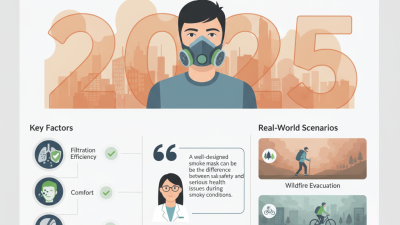
Smoke mask buying decisions should begin with the standard, not the product photograph. Ask which hazard the mask addresses: particles, toxic gases, or both. A particulate respirator may not protect against gases. Check the exact standard number, test category, size range, and intended use.
Tip 1: Request the complete certificate and test report. Confirm the manufacturer, model, filtration class, test date, and issuing laboratory. A certificate logo alone proves very little. Also check whether the document applies to the exact model you plan to import. In global purchasing, local authorities may recognize different standards, so verify current requirements before placing a large order.
Tip 2: Read product claims like a skeptical inspector. Words such as “smoke-proof,” “chemical protection,” and “all-day safety” can sound reassuring, but they may lack technical limits. Look for measured filtration performance, breathing resistance, leakage information, and service-life guidance. Packaging should match the technical documents. Small differences matter, including valve design, strap layout, and packaging language.
Tip 3: Test samples under realistic conditions. Check seal quality on several face shapes, not only one tester. Ask for batch traceability and quality-control records. A past report may not represent today’s production. That is an uncomfortable point, but it deserves attention. Certifications can also expire, change scope, or become misunderstood during translation. Independent verification is often worth the extra cost.
| Buying Tip | What to Check | Relevant Standard or Requirement | Reliable Evidence | Important Product-Claim Check |
|---|---|---|---|---|
| 1. Identify the Hazard First | Determine whether the wearer needs protection from airborne particles, smoke particulates, gases, vapors, or a combination of hazards. | Particulate filtering standards do not automatically cover gases, vapors, oxygen deficiency, or carbon monoxide. | A written hazard assessment, safety data information where applicable, and a product design matched to the identified contaminant. | A disposable particulate respirator should not be advertised as protection against toxic gases, carbon monoxide, or oxygen-deficient environments unless specifically designed and approved for that purpose. |
| 2. Match the Market Standard | Confirm that the mask classification corresponds to the destination market and intended use. | Examples include EN 149 for filtering half masks in Europe, 42 CFR Part 84 for NIOSH-approved particulate respirators in the United States, GB 2626-2019 for respiratory protective equipment in China, and AS/NZS 1716 for respiratory protective devices in Australia and New Zealand. | The exact standard number, classification, edition, approval or conformity route, and scope should appear in the technical documentation and on the product or packaging where required. | Do not treat labels such as “PM2.5 mask,” “smoke mask,” or “high filtration” as regulatory classifications by themselves. |
| 3. Verify Certification and Approval | Check whether the product has a valid approval, conformity assessment, or certification for the claimed market. | For example, “N95” is a regulated approval class under the United States NIOSH system; “FFP2” is a European filtering class under EN 149; “KN95” is a Chinese classification under GB 2626-2019. | Use an approval number, declaration of conformity, certificate, test report, and publicly searchable or independently verifiable certification record when available. | A laboratory test report is not always the same as formal market approval. Confirm that the report applies to the exact model, configuration, and manufacturing site. |
| 4. Review Filtration Test Results | Examine the test method, test particle or aerosol, flow rate, resistance results, and minimum filtration performance. | Different standards use different test conditions and classification systems, so filtration percentages should not be compared without reviewing the test method. | A complete report should identify the applicable standard, mask model, sample quantity, test conditions, results, laboratory details, and report date. | “99% filtration” is incomplete unless the product claim states what was filtered, under which test method, and whether the result applies to the whole respirator or only the filter material. |
| 5. Check Fit and Leakage Control | Evaluate the seal, nose area, head straps, size range, adjustability, and compatibility with facial hair or other personal protective equipment. | Total inward leakage and fit-related performance can materially affect real-world protection; a high-performing filter cannot compensate for a poor face seal. | Look for fit-test data, user instructions, sizing information, seal-check instructions, and evidence that the exact design was tested. | Avoid claims that a mask “fits everyone” or provides the same protection for every face shape without supporting fit evidence. |
| 6. Confirm Breathing Resistance and Wearability | Check inhalation and exhalation resistance, strap durability, humidity performance, temperature limits, and intended wearing time. | Applicable respirator standards specify performance requirements for breathing resistance and, for some designs, exhalation valves and other features. | Request the relevant test results, user instructions, storage conditions, shelf life, and replacement guidance. | Do not equate “comfortable,” “cooling,” or “easy breathing” with a measured performance level. A valve may improve exhalation comfort but can allow unfiltered exhaled air. |
| 7. Audit Labels, Traceability, and Claims | Check model number, lot or batch code, production date, expiry or shelf-life information, manufacturer details, instructions, packaging, and language requirements. | Labels and documentation must be consistent with the applicable market regulation and the exact approved or tested product configuration. | Perform pre-shipment inspection, document review, random sampling, and periodic re-testing when materials, suppliers, or production locations change. | Be cautious of unsupported terms such as “medical grade,” “virus-proof,” “100% protection,” “certified” without a certificate number, or “approved worldwide.” |
Tip 1: Identify the hazard before buying. Smoke contains fine particles, gases, and vapors. A particulate respirator cannot remove every contaminant.
Tip 2: Compare filter ratings carefully. NIOSH-certified N95 respirators filter at least 95% of airborne particles when properly fitted. The EPA’s Wildfire Smoke Guide explains that ordinary cloth masks provide limited protection against fine smoke particles. Tip 3: Check certification details, not just marketing language. Certification numbers should be verifiable through official records.
Tip 4: Fit matters more than appearance. Gaps around the nose or cheeks can reduce protection sharply. Facial hair may prevent a reliable seal. Tip 5: Test comfort during movement. Walk, speak, and turn your head while wearing it. A mask that feels tolerable for two minutes may become unbearable during a long commute. I have found that stiff edges and humid interiors cause early removal. That is a real failure.
Tip 6: Examine reusability instructions. Some respirators use replaceable filters, while others are disposable. Reuse should follow the manufacturer’s storage and replacement guidance. Discard the respirator if it is damaged, dirty, wet, or difficult to breathe through. Tip 7: Consider fit testing for frequent workplace use. OSHA and NIOSH guidance treat fit testing as essential for tight-fitting respirators. The CDC also advises users to check the seal every time they wear one. No mask is perfect. Selection should balance filter performance, stable fit, breathing comfort, and realistic replacement needs.
Compare filter types, fit, comfort, and reusability before selecting respiratory protection for smoke and fine particles.
The chart compares published minimum filtration ratings for selected respirator classes: FFP1, FFP2, and FFP3 under EN 149, and N95, N99, and N100 under NIOSH classifications. These ratings describe filter performance under specified laboratory test conditions; an effective seal, correct size, low leakage, and suitable certification are also essential.
Assess Supplier Quality, Pricing, and Global Shipping Terms
Smoke mask purchasing should begin with performance, not a low quotation. The WHO reported in 2022 that 99% of people breathe air above recommended pollution limits. Ask suppliers for independent test reports, filtration results, material specifications, and batch traceability. Confirm the product matches the required standard, such as NIOSH or EN 149, for your destination market. Request samples from different production batches. One sample can look excellent.
Audit the factory remotely or in person. Check incoming material records, seal strength tests, packaging storage, and complaint handling. ISO 9001 certification helps, but it does not prove mask performance. Compare quoted prices by usable unit, including straps, valves, packaging, testing, and replacement rates. Very cheap offers may hide inconsistent sizing or weak seals. I have seen buyers overlook fit testing. That mistake becomes expensive.
Clarify delivery terms under ICC Incoterms 2020. Confirm who handles export clearance, freight, insurance, duties, and destination delivery. UNCTAD’s Review of Maritime Transport 2024 notes that about 80% of global merchandise trade by volume moves by sea. Therefore, request realistic sailing dates, container assumptions, port charges, and delay procedures. Compare EXW, FOB, and DDP carefully. Written terms prevent costly surprises. Recheck them before payment.
7 Smoke Mask Buying Tips for Global Buyers
Smoke masks are not interchangeable. Fine particles, toxic gases, and vapors require different protection. WHO reported that 99% of people breathed air above its guideline limits in 2019. NIOSH classifies particulate filters as 95, 99, or 100, based on filtration efficiency. Ask for the exact protection category. Tip 1: Match the mask to the hazard. Tip 2: Request a current certificate, approval number, and complete test report. Check the testing laboratory and standard edition. A logo alone proves very little.
Tip 3: Test samples on real users. Check leakage around the nose, cheeks, and jaw. Tip 4: Confirm fit-testing guidance and sizing options. A perfect sample is not proof. Seal checks can expose problems, but they do not replace professional fit testing. Tip 5: Compare sample results with production-lot records. Request filtration data, breathing resistance, material specifications, and traceability documents. ISO 16900 test methods and EN 149 requirements may differ from local rules, so buyers should verify market-specific acceptance.
Tip 6: Examine supply continuity before signing. Review monthly capacity, minimum order quantities, lead times, backup materials, and change-notification procedures. Tip 7: Confirm shelf life, storage conditions, complaint handling, and replacement support. The International Labour Organization reports nearly 3 million work-related deaths annually, reinforcing the cost of weak protective procurement. Paperwork can still contain gaps. Ask for an audit trail, not only a brochure.